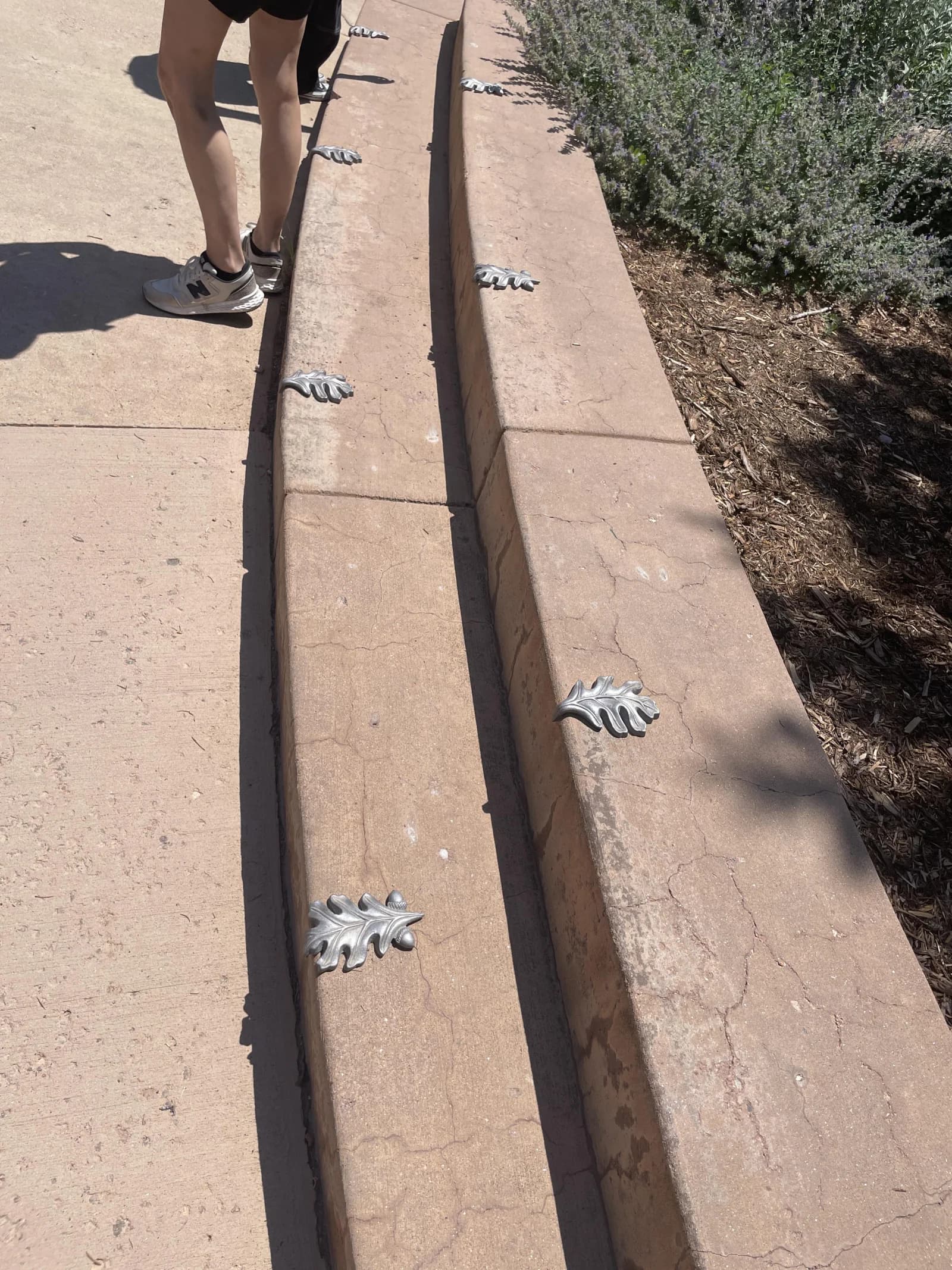
Key takeaways
- Heritage approval for skate stopper installation requires a reversibility demonstration — the conservation officer must be satisfied that removal will not damage the substrate.
- Bronze patina finish (not stainless) is the only finish pre-approved by most Canadian conservation officers for stone and masonry heritage fabric.
- A complete documentation package gets approval in 3–4 weeks — without one, re-submissions can take 4+ months.
Why heritage sites need a different workflow
Canada has over 8,000 federally designated heritage places under DESIGNATION from Parks Canada, plus thousands more at provincial and municipal level. All of them impose conditions on physical interventions — including protective hardware like skate stoppers.
The core principle in Canadian heritage conservation is reversibility: any intervention on designated heritage fabric must be removable without damage to the original material. This eliminates most permanent-anchor methods used on non-heritage sites.
What conservation officers need to see
The standard conservation officer review (whether Parks Canada, provincial, or municipal) requires:
- Product dimensional drawings — plan and section views showing the stud profile, base footprint, and anchor depth relative to the heritage surface.
- Finish specification — material, colour, patina development rate. Bronze patina is the standard for stone; it develops a natural green verdigris that blends into aged masonry.
- Anchor method detail — most conservation officers accept 12 mm stainless-threaded-insert in a core-drilled hole, provided the core drill is wet-diamond (not percussive). Percussive drilling transmits shock that can spall aged stone.
- Reversibility documentation — a step-by-step removal method showing the stud can be extracted and the threaded insert removed without enlarging the core hole.
- Finish sample on matching substrate — for Vieux-Québec limestone sites, we provide bronze finish samples on Île-d'Orléans limestone. For Parliament Hill Tyndall stone, on Tyndall limestone. Samples are couriered to the conservation officer 2 weeks before review.
The 4-week timeline
Week 1: Submit product dimensions, anchor method detail, reversibility documentation, and finish specification to conservation officer. Request confirmation of substrate samples required.
Week 2: Courier substrate-matched finish samples. Conservation officer field review (many want to see the site and the sample together).
Week 3: Conservation officer internal review. We follow up on day 16 if no response.
Week 4: Conditional approval issued (typically with minor conditions like "avoid core drilling within 300 mm of existing mortar joints"). We incorporate conditions into the installation plan.
Heritage-specific products we stock
Our bronze patina studs (12 mm dome profile) are pre-stocked for rapid deployment on heritage sites. The patina finish is brass alloy, not painted stainless — it develops naturally to match aged bronze architectural hardware. For Parks Canada sites, we maintain a pre-qualification dossier that eliminates two of the four submission steps.
For more on our product range, see Skateboard Deterrents for Ledges. For municipal and parks department procurement, see our municipalities and parks departments industry page. For city-specific heritage work, visit our cities page.
The 4-week heritage workflow in detail
Week 1 — Site survey + heritage classification. Confirm whether the install location falls inside a designated heritage district (provincial, municipal, federal Parks Canada, or UNESCO World Heritage). Toronto, Montreal, Vancouver, Quebec City, Halifax, Winnipeg, and Ottawa all run multi-tier heritage frameworks. Pull the heritage-conservation district map for the destination city, identify the responsible heritage office, and confirm the conservation officer assigned to the address.
Week 2 — Bronze patina sample submission. Submit a 75 mm x 75 mm sample of the proposed patina to the heritage-conservation officer. Include the patina-recipe documentation (chemical bath, oxidation timeline, sealing coat), warranty documentation, and a Munsell color reference. Heritage offices commonly request 2-3 patina variants — typically a darker bronze for granite contexts, mid-tone for limestone, and lighter aged-brass for warm-stone Beaux-Arts buildings.
Week 3 — Conservation-officer review. The heritage office returns sample feedback within 5-10 working days. Common revisions: tone deeper to match adjacent existing hardware, add a low-sheen wax topcoat to reduce reflectivity, adjust spacing pattern to align with masonry coursing.
Week 4 — Final approval + install scheduling. With heritage sign-off, schedule install with bonded crews carrying $5M general liability and provincial heritage-compliance training. Most heritage installs require a conservation officer present during anchor drilling on listed-property substrates.
Pre-install documentation pack
The full heritage approval pack includes site-context photographs at 5 m, 1 m, and 0.3 m focal distances, material data sheet for the bronze alloy (typically C385 or C642 architectural bronze), patina recipe sheet with cure-time notes, drilling-method documentation showing non-percussive anchors for stone substrates, lifecycle-maintenance plan covering re-waxing intervals and patina-touch-up procedures, and a heritage-approval letter from the conservation office on file before install begins.
Real Canadian examples we have shipped
Vieux-Montreal — bronze stoppers on Place D'Armes limestone benches, approved by Ville de Montreal patrimoine 2024. Quebec City UNESCO district — aged-bronze handrail stoppers on Citadelle perimeter granite, dual-approved by Ministere de la Culture and Parks Canada. Vancouver Gastown — patina-bronze ledge stoppers on heritage-brick frontage, Heritage Vancouver approval 2023. Halifax Citadel Hill — federal Parks Canada heritage-finish bronze stoppers on national-historic-site benches, 2025.
Avoiding common rejections
The most common heritage-rejection reasons are stainless-steel hardware proposed where bronze is mandatory (the gleam reads as 21st-century retrofit on Victorian-era stone), brand-new bronze without artificial aging (raw bronze contrasts too sharply with weathered surrounds), and mechanical-anchor methods that require percussive drilling on listed stone (only chemical anchors and pre-drilled friction-fit pins are typically allowed). All three are avoidable with the workflow above.
FAQ
Does heritage approval add cost to the project?
The approval workflow itself doesn't — we include the conservation-officer submission package as part of every heritage quote. Cost adds at the timing layer: approval typically takes 3-4 weeks at federal level (Parks Canada, PSPC) and 2-3 weeks at provincial / municipal. We sequence orders so the hardware ships only after approval to avoid wasted inventory.
Is bronze patina the only heritage-approved finish?
For UNESCO and federal heritage sites yes — Parks Canada conservation guidelines specify bronze patina. For provincial / municipal heritage (Heritage Toronto, Ville de Québec patrimoine), brushed stainless is sometimes approved on lower-visibility sites. We discuss the trade-off with the conservation officer on every project.
Can heritage installs be reversed?
Yes — that's the conservation requirement we engineer to. Every heritage anchor specification includes a removal-method documentation showing zero substrate damage on extraction. Stainless threaded inserts in cored holes can be removed and the hole filled with stone-matched mortar.