Commercial Real Estate
Commercial Real Estate
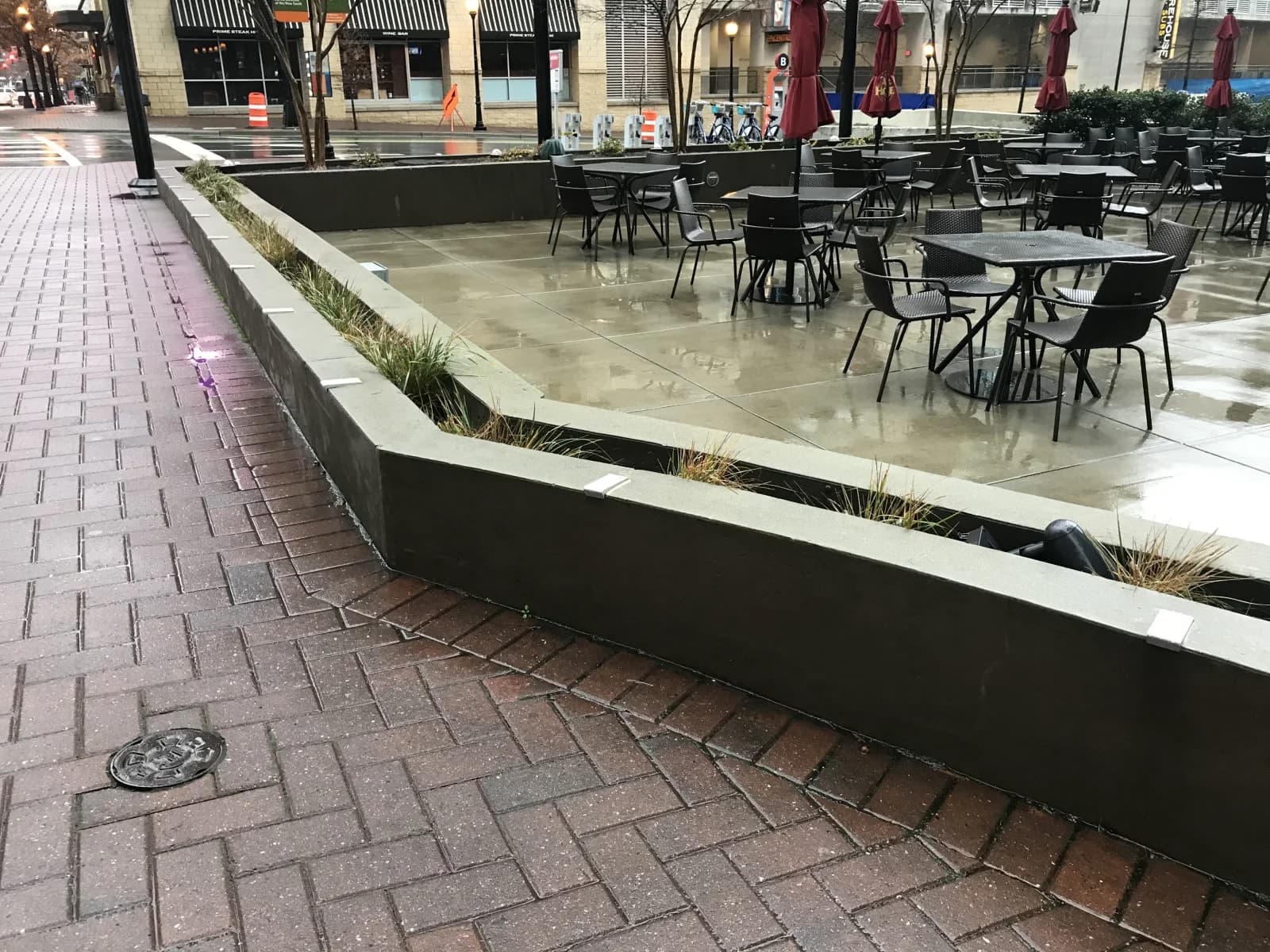
Key takeaways Commercial REIT and property-management firms cite tenant complaint reduction as the primary ROI driver, not direct repair savings — a single ground-floor retail tenant losing $20K/month in foot traffic from a damaged storefront ledge dwarfs any skate-stopper install cost. We work with Cadillac Fairview, Oxford Properties, RioCan, Choice Properties, Brookfield Properties, First Capital, and Allied Properties REIT on portfolio-wide deterrent specs. Standard CRE quote includes lobby photography review, tenant impact assessment, and after-hours install scheduling to minimize disruption.
Common Deployments
Working with Commercial Real Estate
Key Takeaways
- ✓Key features: Tenant frontage ledges, Lobby planters, Garage entrance walls
A Class-A office tower or mixed-use property has revenue at stake that no school or transit authority faces. A single broken granite ledge outside a flagship retail tenant's storefront can cost the landlord a full quarterly rent abatement if the tenant cites property-condition breach in their lease. That math makes a $3-4K skate-stopper retrofit trivially cheap compared to $60K in abated rent. We frame our quotes for CRE buyers around this lifecycle, not the unit-cost of hardware.
Commercial Real Estate — Procurement & Contracting
Large REITs typically run a portfolio audit before deploying — identifying every property with chronic grind damage across office, retail, and mixed-use assets. We provide free portfolio audits for REIT clients with 20+ properties, with prioritized retrofit recommendations based on tenant-impact severity, repair-history cost, and visibility (lobby vs. back-loading-dock). Portfolio rollouts typically span 6-9 months with 2-3 properties per month to maintain quality control.
Engagement Workflow
Class-A property managers require install windows that don't disrupt tenant operations or visiting clients. Our standard CRE install schedule is Saturday 06:00-14:00 or Sunday 08:00-16:00, with dust-control measures, plastic sheeting on adjacent surfaces, and noise-limited tooling (cordless impact drivers, no jackhammers). For properties with 24/7 tenants (medical clinics, data centres), we schedule off-peak weeknight windows with prior notice to building security. CRE properties care about visual coordination more than any other segment.
Reporting & Closeout
We offer custom powder-coat finishes matched to building brand colors (Cadillac Fairview navy, Oxford Properties charcoal, etc. ) and flush-mount profiles that integrate visually with existing storefront design. For heritage-designated CRE properties (Allied Properties' brick-and-beam portfolio, for example), we coordinate bronze patina finishes with the local conservation officer. CRE procurement runs on portfolio-rollout calendars — not a single RFP, but a scheduled retrofit of 20-100 properties over 6-9 months.
References & Bonding
We currently have active portfolio agreements with Cadillac Fairview, Oxford Properties, RioCan, Choice Properties, Brookfield Properties, First Capital, and Allied Properties REIT. Typical engagement: free portfolio audit (2-week turnaround for 30 properties), prioritized retrofit matrix by tenant-impact severity, then 2-3 property installs per month with Saturday 06:00-14:00 or Sunday 08:00-16:00 windows. Custom powder-coat finishes available in brand-specific colours with 3-week lead time.
Why Commercial Real Estate choose Skatestopper.ca
Recommended Skate Stopper Models
Commercial Real Estate served across Canada
Frequently Asked Questions — Commercial Real Estate
How do I get a quote — what information do you need from us?
Send us (1) photos of the problem surface, (2) rough dimensions (length, width, surface material), (3) city, and (4) the kind of grind activity you're seeing (storefront ledge, bench, handrail, etc.). That's enough for an initial quote within 24 business hours. For commercial real estate, school, transit, or government deployments, send photos of all locations, the AODA / heritage status of the property, and any existing architectural drawings if you have them. We follow up with a site-visit quote if the deployment is large or complex — site visits are free within our 15 priority cities, flat-rate $250 outside. Quotes are itemized (hardware, anchoring, install labour, climate upgrades, taxes) — no surprise add-ons, no quote bait-and-switch.
What is the difference between skate stoppers and roller skate toe stops?
They are completely different products for completely different industries. Skate stoppers (our category) are small architectural anti-skateboarding deterrents — stainless, bronze, or aluminum brackets, studs, and clamps that are mounted on commercial benches, ledges, planters, handrails, and concrete edges to prevent skateboarders from grinding on the surface and damaging it. They are sold to municipalities, transit authorities, schools, retail property managers, and commercial real estate owners as a property-protection tool, with stamped engineering and bonded installation. Typical install spacing: 30-45 cm centres, 6-15 mm protrusion, 304 or 316L stainless. Roller skate toe stops (NOT our category) are the rubber brake pads bolted to the front of a quad roller skate that the skater uses to stop or push off. They are sold by skate-shop retailers (RollerGirl.ca, Rollerskatin.ca, Bont.com Canada) for $15-40 per pair to roller-derby players and recreational skaters. If you searched 'skate stoppers' and meant the rubber brake on a roller skate, we are not your supplier. If you searched 'skate stoppers' and meant 'how do I stop skateboarders from grinding on my property,' you are in the right place.
Do I need a permit to install skate stoppers in Toronto, Vancouver, or Montréal?
For owner-of-record private property — no permit required in any of those cities. For public-sidewalk-adjacent ledges that are technically city property, you need a right-of-way alteration permit (Toronto: TPS Right-of-Way, Vancouver: VanConnect Sidewalk Cafe + Permit, Montréal: Permis d'occupation temporaire du domaine public). For heritage-designated property in any of those three cities, you need conservation-officer approval — Heritage Toronto, Heritage Vancouver, or Ville de Montréal patrimoine. We coordinate all three permit/approval workflows as part of standard project scope — typical timeline is 2-4 weeks from quote acceptance to install. For most Canadian municipal and commercial contexts, install follows our standard process: 24-hour quote, stamped engineering attached, bonded crew, install completed within the target city's seasonal window.
Have a project for Commercial Real Estate?
Send us your RFP, scope, or specification — our bid desk responds within one business day.