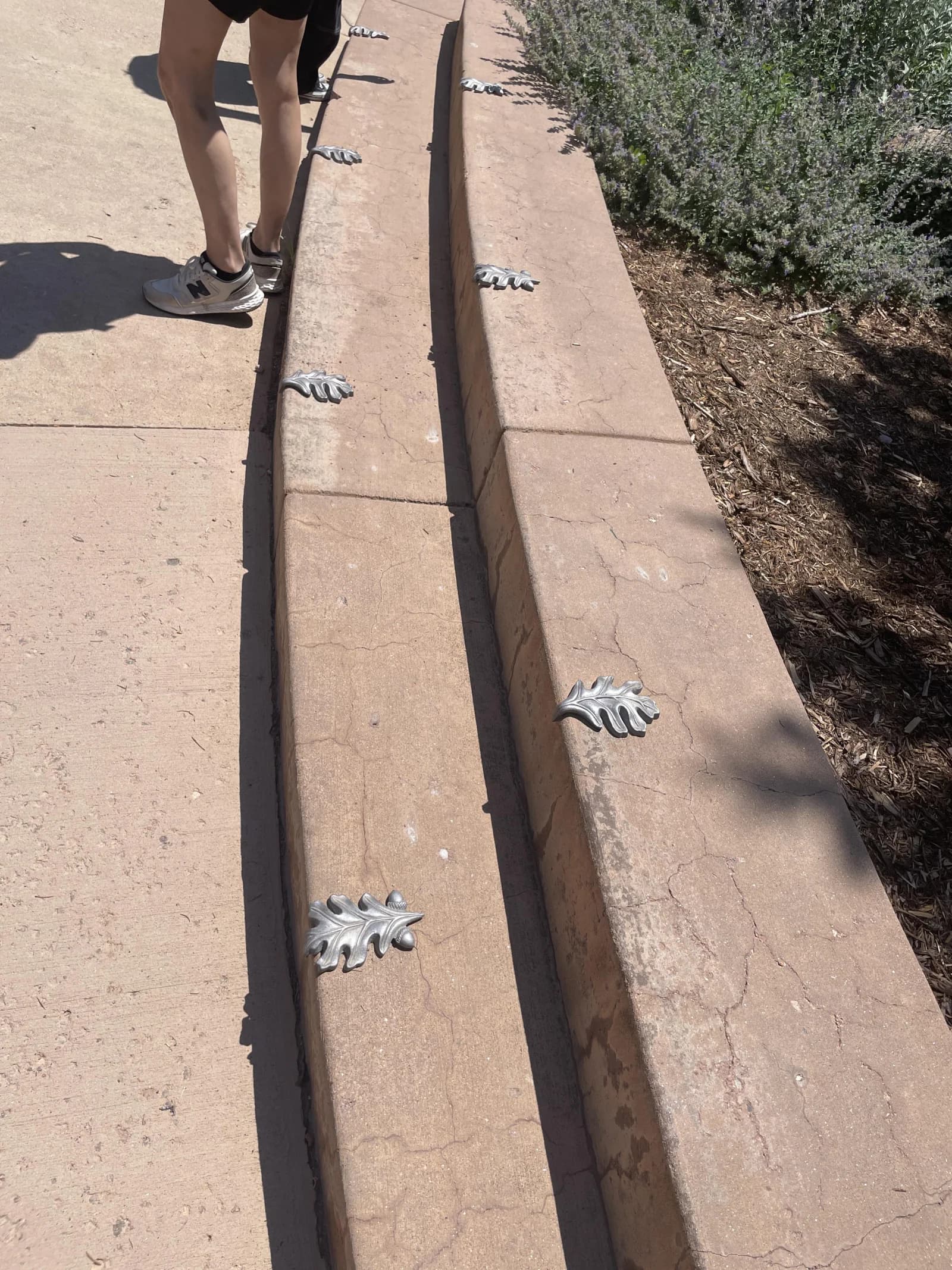
Skateboard Deterrents for Concrete
Skateboard deterrents for concrete — heavy-duty epoxy-anchored studs for planters, retaining walls, and curbs. Frost-rated to -40 °C.
Skateboard Deterrents for Concrete
Key takeaways Skateboard deterrents for concrete are epoxy-anchored studs designed for concrete planters, retaining walls, curbs, and seat-wall caps where surface-mount lag anchors won't hold. Anchor depth is 75–100 mm with a chemical-cure epoxy rated for freeze-thaw cycles down to -40 °C — the spec required for any Canadian municipality north of the Toronto frost line. 316L marine-grade stainless studs for coastal cities (Vancouver, Halifax, Victoria); 304 stainless for inland deployments.
Best for: Concrete planters, retaining walls, curbs, and stair noses
Features & Specifications
About Skateboard Deterrents for Concrete
Key Takeaways
- ✓Skateboard Deterrents for Concrete pricing: $55–$110 per anchor installed
- ✓Key features: 2-part epoxy injection — 70+ MPa compressive strength, 40 kN pullout rating — survives any human grind force, Frost-depth specs from 0.45 m (Victoria) to 2.4 m (Winnipeg) — Canadian climate-zone matched
Skateboard deterrents for concrete are epoxy-anchored studs designed for concrete planters, retaining walls, curbs, and seat-wall caps where surface-mount lag anchors won't hold. Anchor depth is 75–100 mm with a chemical-cure epoxy rated for freeze-thaw cycles down to -40 °C — the spec required for any Canadian municipality north of the Toronto frost line. 316L marine-grade stainless studs for coastal cities (Vancouver, Halifax, Victoria); 304 stainless for inland deployments. Frost depth — the depth to which ground freezes in winter — varies enormously across Canada.
Skateboard Deterrents for Concrete — Engineering & Construction
Victoria (Zone 5) freezes to only 0. 45 m. Winnipeg (Zone 7B) freezes to 2. 4 m.
Installation & Compliance
Our specifications adjust the anchor depth and the expansion-joint detail at the stud-concrete interface to handle the freeze-thaw cycle in your zone. Using a Toronto spec in Edmonton would result in stud heave failure within 2 winters. Proper concrete-set installation requires diamond-core drilling (not impact drilling — impact creates micro-fractures that compromise the epoxy bond). We use wet-core drilling with shop-vac extraction to keep the hole clean.
Warranty & Support
After drilling, the hole is brushed, blown, and brushed again before epoxy injection. Cure time is 24 hours at +5°C or warmer — for cold-weather installs, we use rapid-cure winter-grade epoxy that cures down to -10°C. Concrete-set deployments are the most engineering-heavy spec in our catalogue — every quote includes a per-site frost-depth analysis matched to your municipality (Victoria 0. 45 m through Winnipeg 2.
Procurement & Lead Time
4 m) and an expansion-joint detail sized for the local freeze-thaw cycle. Lead time is 5-7 business days for 304 stainless with chemical-cure standard epoxy (cures at +5 °C and above), or 2-3 weeks for 316L with rapid-cure winter-grade epoxy (cures down to -10 °C). Volume pricing at 30+ studs; bulk municipal orders typically receive $28-42 per stud installed. Warranty: lifetime on 316L structural elements, 25 years on epoxy bond, with stamped engineering for OBC 3.
4. 6. 5 / CNB 9. 8.
7. 4 on every order. The most common concrete-set sites are planter walls (especially on TTC and STM platform edges), retaining walls along Halifax and Vancouver waterfronts, courthouse and government-building stair noses, and public-art installation bases. For heritage concrete (BC Legislature, Quebec City fortifications), we coordinate with the conservation officer on discreet bronze patina finish and reversible epoxy formulations.
Product Specifications
| Specification | Details |
|---|---|
| Product | Skateboard Deterrents for Concrete |
| Price Range | $55–$110 per anchor installed |
| Best For | Concrete planters, retaining walls, curbs, and stair noses |
| Materials & Finish | 316L marine / 304 stainless / bronze patina; tamper-resistant set screws |
| Installation | Surface-mount or epoxy-anchored; 5–15 min/stud (surface) or 30–45 min/stud (concrete-set) |
| Warranty | Lifetime corrosion (316); 25-year (304); 30-year (bronze patina); 5-year install workmanship |
| Compliance | OBC 3.4.6.5 / CNB 9.8.7.4 handrail; AODA / CSA B651-18 accessibility; NBCC 2020 frost-depth |
| Lead Time | 2–4 weeks stock items; 6–10 weeks custom finish; same-day Brantford ON dispatch for replacements |
Why Choose Skateboard Deterrents for Concrete?
Skateboard Deterrents for Concrete from Skatestopper.ca are engineered for Canadian transit conditions — climate-rated, accessibility-compliant, and shipped with full procurement documentation so AHJ review is single-pass.
Skateboard Deterrents for Concrete Available Across Canada
We design, supply, and install skateboard deterrents for concrete in major cities across all 10 provinces and 3 territories.
Frequently Asked Questions About Skateboard Deterrents for Concrete
What is the difference between skate stoppers and roller skate toe stops?
They are completely different products for completely different industries. Skate stoppers (our category) are small architectural anti-skateboarding deterrents — stainless, bronze, or aluminum brackets, studs, and clamps that are mounted on commercial benches, ledges, planters, handrails, and concrete edges to prevent skateboarders from grinding on the surface and damaging it. They are sold to municipalities, transit authorities, schools, retail property managers, and commercial real estate owners as a property-protection tool, with stamped engineering and bonded installation. Typical install spacing: 30-45 cm centres, 6-15 mm protrusion, 304 or 316L stainless. Roller skate toe stops (NOT our category) are the rubber brake pads bolted to the front of a quad roller skate that the skater uses to stop or push off. They are sold by skate-shop retailers (RollerGirl.ca, Rollerskatin.ca, Bont.com Canada) for $15-40 per pair to roller-derby players and recreational skaters. If you searched 'skate stoppers' and meant the rubber brake on a roller skate, we are not your supplier. If you searched 'skate stoppers' and meant 'how do I stop skateboarders from grinding on my property,' you are in the right place.
What are skate stoppers and how do they work?
Skate stoppers are small metal studs or strips installed at intervals along ledges, walls, handrails, and benches. They physically interrupt the continuous flat edge that skateboard trucks, BMX pegs, and inline-skate boots need to grind. When a rider attempts to grind a protected surface, the stopper forces their hardware off the ledge within centimetres — making the surface unusable as a grind feature.
They work without alarms, without surveillance, and without confrontation. Once installed, the deterrent is permanent for the life of the hardware (typically 15-25 years for stainless, 30+ years for bronze patina). The riders simply move on to unprotected surfaces.
What's the difference between surface-mount and concrete-set skate stoppers?
Surface-mount studs anchor to the face of the surface using a stainless lag screw or wedge anchor — fast install, removable, suits brick, block, stone, and standard concrete with hairline cracks. Concrete-set studs anchor into the substrate using 2-part epoxy injection — permanent install, survives heavy freeze-thaw cycling, suits new concrete, retaining walls, and high-traffic transit-platform edges. Surface-mount installs in 5-15 minutes per stud; concrete-set requires diamond-core drilling, hole prep, and 24-hour cure so the install runs 30-45 minutes per stud. For Canadian climates with deep frost (Edmonton, Winnipeg) we recommend concrete-set for any high-value or high-traffic location — surface-mount can work loose over multiple winters. For mild climates (Vancouver, Victoria), surface-mount lasts decades without issue.
Will skate stoppers damage my granite, limestone, or concrete ledge?
No — when installed correctly. Surface-mount installs use diamond-core drilling (not impact drilling) for granite, limestone, and polished concrete — a 12 mm cored hole with stainless threaded insert leaves zero stress fractures. Removal restores the surface to a small plug-fillable hole that's invisible after grouting.
Wood-capped masonry uses pilot drilling for #14 lag screws — also fully reversible. The damage scenario is not the install — it's letting grind damage continue. A single grind session can chip granite edge 3-8 mm along a 600 mm stretch, requiring diamond grinding and re-polishing ($1,800-3,500).
The 12 mm install hole is invisible compared to that damage. For heritage stone, we coordinate every install with conservation officers who specifically approve our methods.
Related skate stoppers
Need Skateboard Deterrents for Concrete?
Our bid desk responds to every quote and RFP within one business day. Volume discounts available on 20+ unit orders.