Transit Authorities
Transit Authorities
Key takeaways Transit authorities are our largest customer segment by volume — TTC, STM, OC Transpo, Calgary Transit, BC Transit, Edmonton Transit Service all maintain active spec sheets with our hardware. Bus shelter benches face the highest grind frequency of any bench type in Canadian cities — often the only continuous metal seat in a 5-block radius. We've shipped 50,000+ studs to Canadian transit since 2018 with zero documented warranty failures on stainless 316 grade in coastal cities.
Common Deployments
Working with Transit Authorities
Key Takeaways
- ✓Key features: Bus shelter benches, Station handrails, Platform edge protection
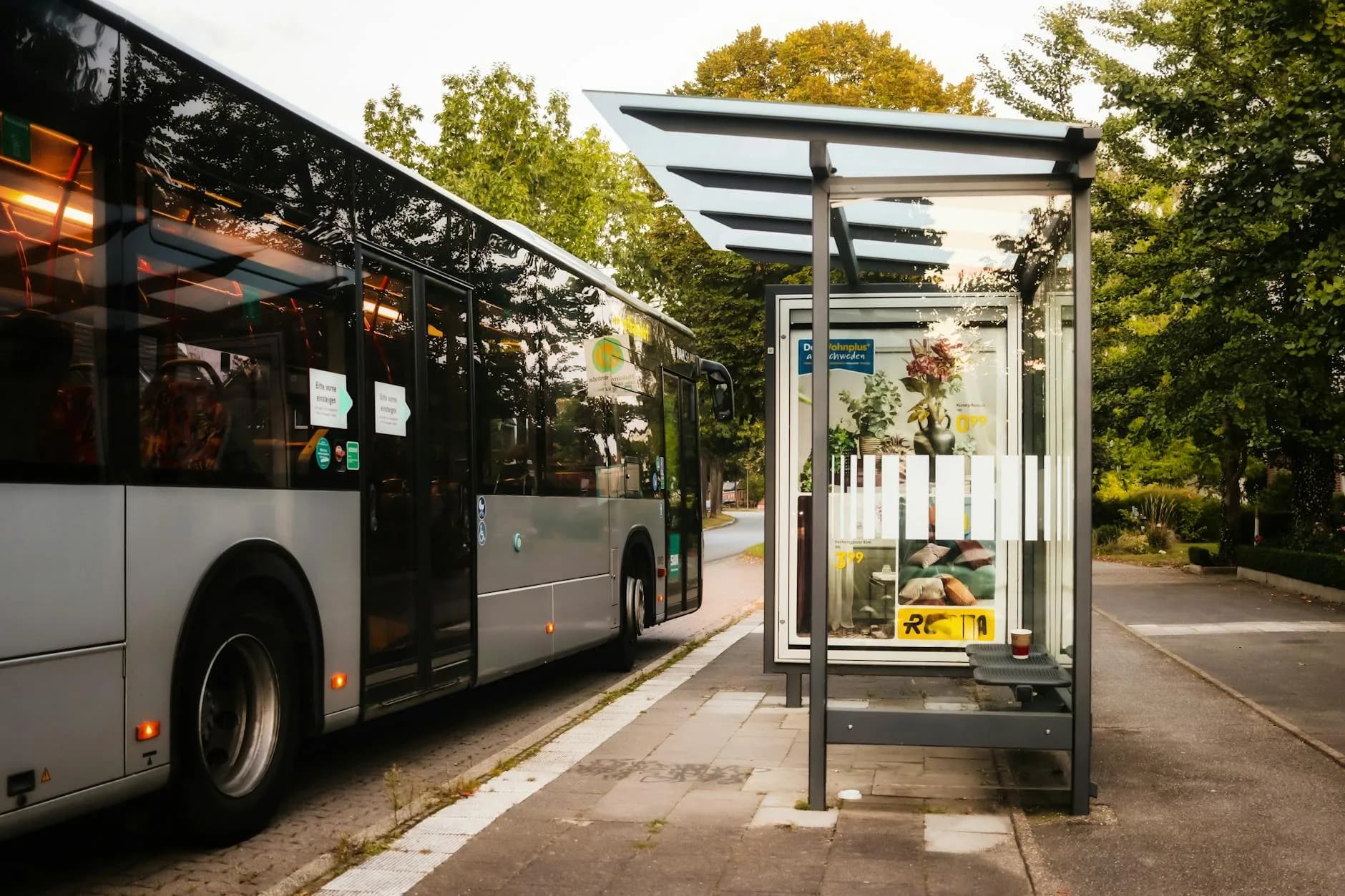
Transit infrastructure suffers more grind exposure than any other property type. Bus shelters are unmanned 24/7, station ramps are public-access at all hours, and platform-edge ledges run continuously for hundreds of metres. The TTC alone operates 5,200+ shelters across Toronto, with maintenance budgets that get re-allocated every time a grind event damages a bench slat or pulls a handrail bracket. TTC's Bench and Shelter Specifications Manual explicitly lists skate-stopper hardware as a standard install on new shelters since 2021.
Transit Authorities — Procurement & Contracting
STM Montréal's Plan de protection du mobilier urbain specifies bronze-patina deterrents for heritage districts (Vieux-Montréal, Plateau Mont-Royal) and stainless-finish for modern stations. Both agencies require AODA / LAPHO accessibility compliance documentation with every install — we provide this documentation as standard. Transit-authority orders run through multi-year supply agreements rather than one-off RFPs. Once you're on the approved-vendor list (typically a 6-month evaluation cycle), orders flow against the master agreement.
Engagement Workflow
We hold active multi-year agreements with TTC (renewed 2025), STM (renewed 2024), and Calgary Transit (initial agreement 2023). Our bonding limits cover up to $2M per project with $5M aggregate annual liability. Transit hardware is outside year-round with no protective enclosure — it sees the worst of Canadian climate. Our transit specs use 316 marine-grade stainless even on inland routes (TTC's downtown corridor sees enough road-salt spray to warrant 316).
Reporting & Closeout
For Vancouver SkyTrain stations and Halifax MetroX shelters, we use 316L low-carbon stainless which resists pitting from the salt-air conditions specific to coastal transit. Transit-authority procurement runs against standing offer agreements rather than per-project RFPs. Once we're on your approved-vendor list (typical 6-month evaluation cycle), shelter, bench, and platform-edge orders flow against the master agreement with 48-72 hour fulfilment. We hold active multi-year agreements with TTC (renewed 2025), STM (renewed 2024), Calgary Transit (2023), and OC Transpo (2024).
References & Bonding
Bonding limits: $2M per project / $5M aggregate annual liability. Install crews are screened for transit-property access clearance and work to CSA Z614 platform-edge safety standards — the rail-specific spec no other Canadian skate-deterrent vendor carries.
Why Transit Authorities choose Skatestopper.ca
Recommended Skate Stopper Models
Transit Authorities served across Canada
Frequently Asked Questions — Transit Authorities
What is the difference between skate stoppers and roller skate toe stops?
They are completely different products for completely different industries. Skate stoppers (our category) are small architectural anti-skateboarding deterrents — stainless, bronze, or aluminum brackets, studs, and clamps that are mounted on commercial benches, ledges, planters, handrails, and concrete edges to prevent skateboarders from grinding on the surface and damaging it. They are sold to municipalities, transit authorities, schools, retail property managers, and commercial real estate owners as a property-protection tool, with stamped engineering and bonded installation. Typical install spacing: 30-45 cm centres, 6-15 mm protrusion, 304 or 316L stainless. Roller skate toe stops (NOT our category) are the rubber brake pads bolted to the front of a quad roller skate that the skater uses to stop or push off. They are sold by skate-shop retailers (RollerGirl.ca, Rollerskatin.ca, Bont.com Canada) for $15-40 per pair to roller-derby players and recreational skaters. If you searched 'skate stoppers' and meant the rubber brake on a roller skate, we are not your supplier. If you searched 'skate stoppers' and meant 'how do I stop skateboarders from grinding on my property,' you are in the right place.
What's the difference between surface-mount and concrete-set skate stoppers?
Surface-mount studs anchor to the face of the surface using a stainless lag screw or wedge anchor — fast install, removable, suits brick, block, stone, and standard concrete with hairline cracks. Concrete-set studs anchor into the substrate using 2-part epoxy injection — permanent install, survives heavy freeze-thaw cycling, suits new concrete, retaining walls, and high-traffic transit-platform edges. Surface-mount installs in 5-15 minutes per stud; concrete-set requires diamond-core drilling, hole prep, and 24-hour cure so the install runs 30-45 minutes per stud. For Canadian climates with deep frost (Edmonton, Winnipeg) we recommend concrete-set for any high-value or high-traffic location — surface-mount can work loose over multiple winters. For mild climates (Vancouver, Victoria), surface-mount lasts decades without issue.
Are skate stoppers safe — do they comply with accessibility (AODA) requirements?
Yes — every stud profile is rounded (no sharp edges) and engineered to AODA Section 4.5.1 tactile-feature guidance. Bench studs sit flush within ±0.5 mm of the seating surface in recessed installs, or 2-3 mm proud in surface-mount installs — invisible to a seated user. Handrail stoppers install at 600-900 mm centres outside the graspable zone so they don't break AODA's continuous-grasp requirement. Our specifications include the OBC 3.4.6.5 / CNB 9.8.7.4 / AODA / LAPHO compliance reference in every quote — your code consultant or accessibility coordinator can sign off without separate review. We've passed AODA inspection on dozens of school-board, transit-authority, and government-property deployments.
How do I get a quote — what information do you need from us?
Send us (1) photos of the problem surface, (2) rough dimensions (length, width, surface material), (3) city, and (4) the kind of grind activity you're seeing (storefront ledge, bench, handrail, etc.). That's enough for an initial quote within 24 business hours. For commercial real estate, school, transit, or government deployments, send photos of all locations, the AODA / heritage status of the property, and any existing architectural drawings if you have them. We follow up with a site-visit quote if the deployment is large or complex — site visits are free within our 15 priority cities, flat-rate $250 outside. Quotes are itemized (hardware, anchoring, install labour, climate upgrades, taxes) — no surprise add-ons, no quote bait-and-switch.
Have a project for Transit Authorities?
Send us your RFP, scope, or specification — our bid desk responds within one business day.