The 2.4-metre frost depth — deepest in our network
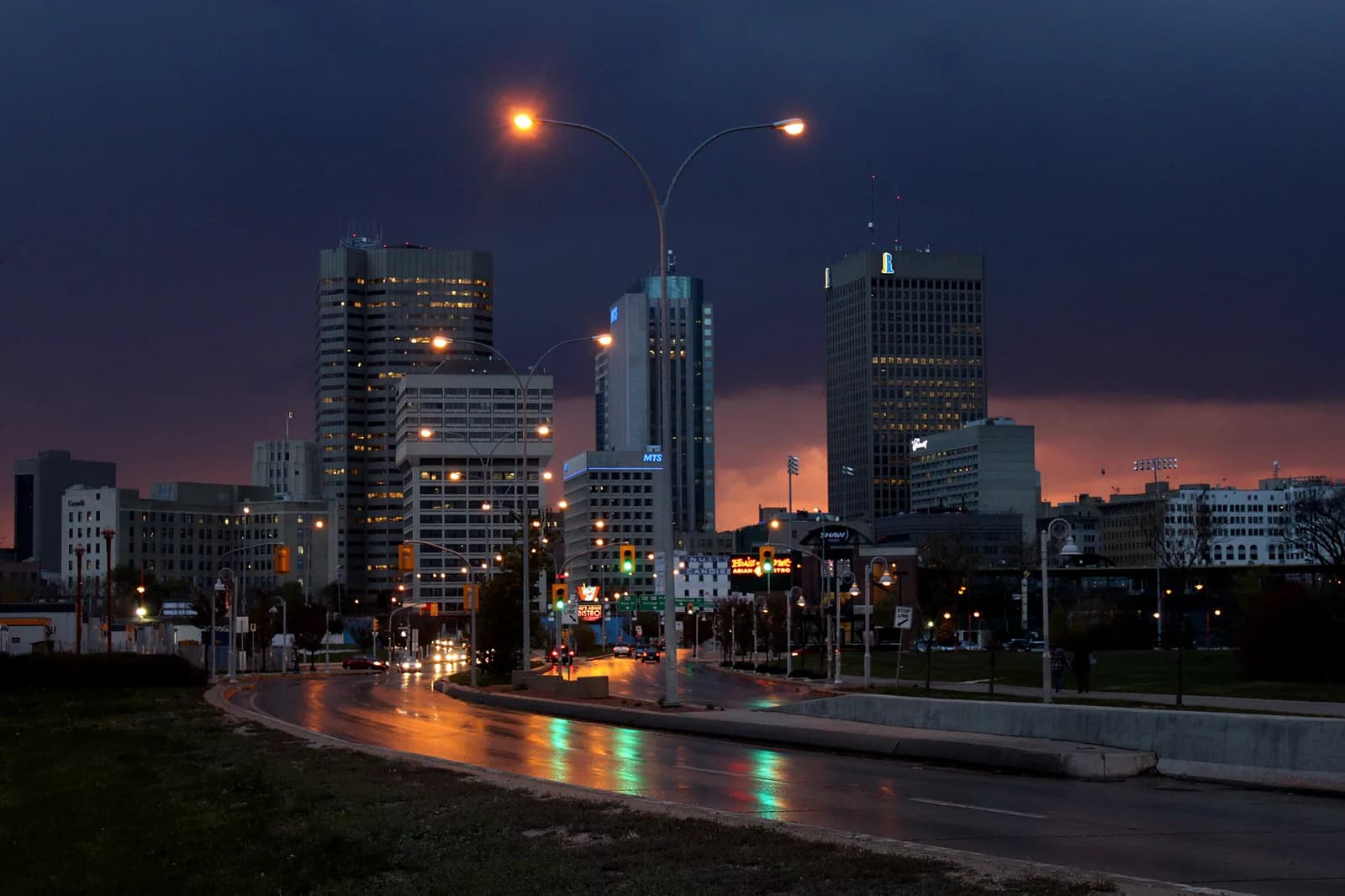
Winnipeg's signature engineering challenge is the 2.4 m frost depth — the deepest in our entire build, 2.7× deeper than Toronto's. The -16.4°C average winter drives extreme freeze-thaw cycling. Standard concrete-set anchors fail here within 2-3 winters; we use extended 100 mm epoxy bonds with double-layer freeze-thaw expansion gaskets on every concrete-set install. Hardware ships with cold-weather rapid-cure epoxy rated to -15°C for mid-winter installs.
The Exchange District is a National Historic Site under federal designation — every deployment within its boundaries requires Heritage Winnipeg coordination plus federal Parks Canada heritage approval. Heritage finish is bronze patina only; brushed stainless is rejected on heritage submission.
Winnipeg Transit maintains 1,200+ shelters and operates the Southwest Rapid Transit corridor. Climate engineering for transit shelter benches is Winnipeg-specific — bench seat slats see -16.4°C cold soak plus road-salt spray. We spec 316 stainless studs with cold-rated grommet seals to prevent water ingress at anchor points during freeze-thaw cycling.
Highest-demand zones in Winnipeg are The Forks, Exchange District heritage, Portage Avenue storefronts, Osborne Village, and we coordinate with Winnipeg Transit across the network's 1200 transit shelters for platform-edge benches and shelter handrails.
Standard procurement runs through Manitoba provincial portals and the city's tender system with the $50K direct-purchase / $50K+ public RFP threshold. Default spec is 304 stainless for inland sites; 316L marine-grade is recommended for properties within 5 km of major salt-treated highway corridors.
We respond to Winnipeg RFPs within 5 business days with stamped engineering, AODA / accessibility-code conformance letters, and bonded-contractor accreditation. Install crews carry $5M general liability. Warranty: 10 years on coatings, lifetime on 316L marine-grade structural elements.
Anti-skateboarding hardware in Winnipeg is most often specified for The Forks, Exchange District heritage, Portage Avenue storefronts, with active vendor records held at Winnipeg Transit.