Condominiums & HOAs
Condominiums & HOAs
Key takeaways Condominium boards spend $3-7K annually per tower on lobby-plaza repair from grind damage — and that's before counting the board-meeting drama when residents see the damage and demand action. We work with major Canadian condo property managers (FirstService Residential, Crossbridge, Del Property Management, Wilson Blanchard) as well as direct condo board engagements. Standard condo deployment includes board-presentation deck, weekend install scheduling, and resident-communication template so the board can manage the rollout cleanly.
Common Deployments
Working with Condominiums & HOAs
Key Takeaways
- ✓Key features: Lobby plaza ledges, Common-area benches, Garage entry walls
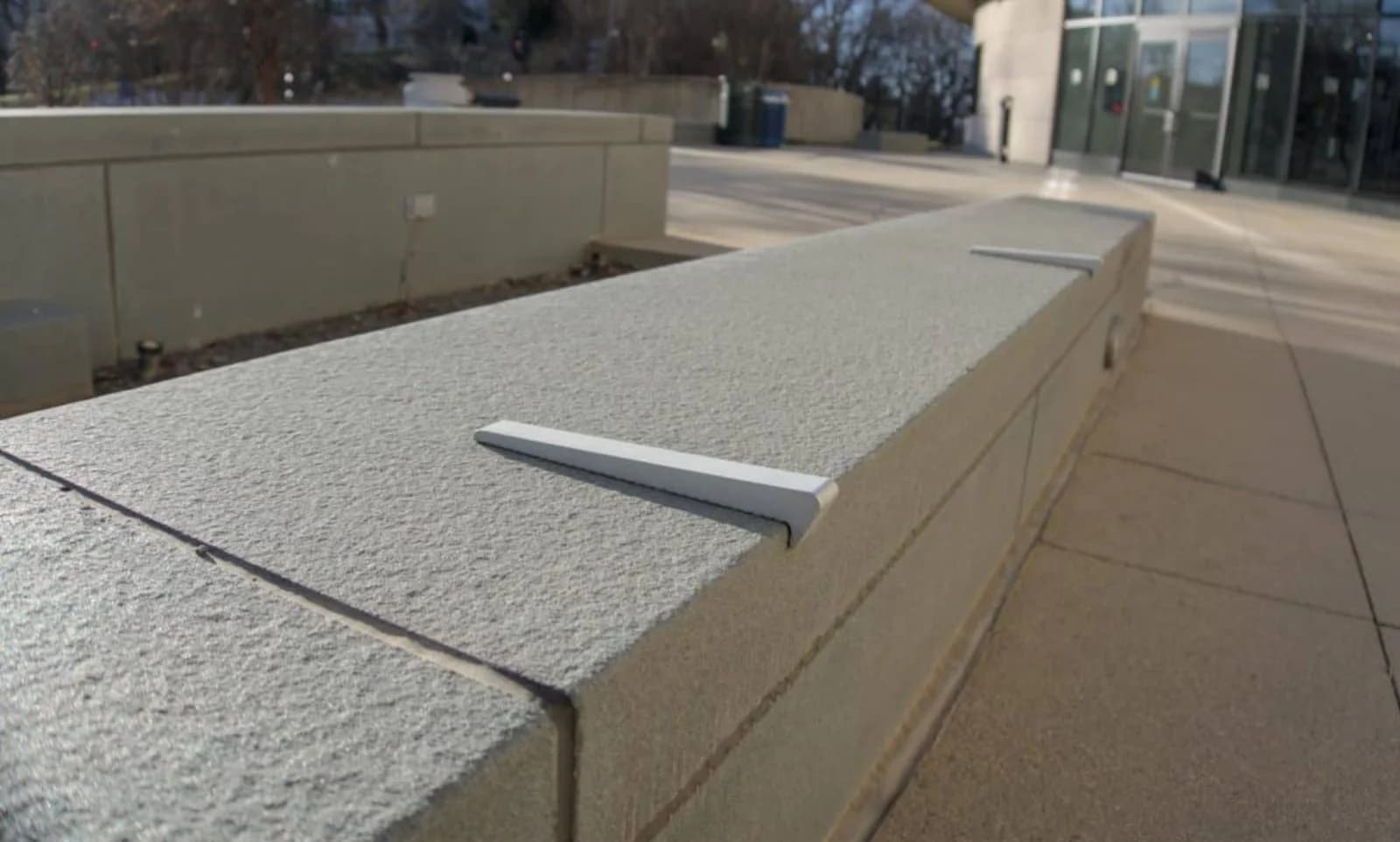
Condo skate-stopper deployments are board-driven, not facilities-driven. A resident notices grind damage, complains to the board, the board chair adds it to the next meeting agenda, and now you have 5-9 board members debating a property-management decision they have no domain expertise in. We support this process with a standardized board-presentation deck — 10 slides covering problem photos, lifecycle costs, install timeline, and resident-communication template — that the property manager can present without further homework. The two highest-frequency targets in condos are lobby-entrance plaza ledges and underground-garage entry walls.
Condominiums & HOAs — Procurement & Contracting
Lobby plazas suffer because they're publicly visible from the street — drawing skaters from outside the property. Garage entries suffer because they're secluded enough that skaters feel unobserved. Both locations are owner-of-record property (not city sidewalk), so the condo corporation has full authority to install deterrents without municipal approval. Newer luxury towers (especially in Toronto's CityPlace, Vancouver's Olympic Village, and Montréal's Griffintown) include pool decks, fitness terraces, and rooftop amenity floors with continuous bench seating.
Engagement Workflow
These are high-prestige amenities where any visible deterrent damages the resident perception of the property. We deploy flush-mount studs in polished mirror finish that integrate visually — invisible to swimming residents, blocking to skaters. Condo corporations can fund deterrent retrofits from operating budget (under $5K typically) or reserve fund (larger projects). For projects over $25K, we provide a reserve-fund justification memo that property managers can submit to the corporation's reserve fund study consultant — this lets the board fund the work without a special assessment vote, which is politically much easier.
Reporting & Closeout
Most Canadian municipal procurement cycles run on a 3-year capital plan, with skate-deterrent installs typically scheduled in the spring/fall window after frost has cleared. We respond to RFP requests within 5 business days and carry stamped engineering for every climate zone. Bonded crews work prevailing-wage municipal contracts across Ontario, BC, Alberta, and Quebec.
Why Condominiums & HOAs choose Skatestopper.ca
Recommended Skate Stopper Models
Condominiums & HOAs served across Canada
Frequently Asked Questions — Condominiums & HOAs
What are skate stoppers and how do they work?
Skate stoppers are small metal studs or strips installed at intervals along ledges, walls, handrails, and benches. They physically interrupt the continuous flat edge that skateboard trucks, BMX pegs, and inline-skate boots need to grind. When a rider attempts to grind a protected surface, the stopper forces their hardware off the ledge within centimetres — making the surface unusable as a grind feature.
They work without alarms, without surveillance, and without confrontation. Once installed, the deterrent is permanent for the life of the hardware (typically 15-25 years for stainless, 30+ years for bronze patina). The riders simply move on to unprotected surfaces.
Are skate stoppers legal to install on private property in Canada?
Yes — installing skate stoppers on owner-of-record private property is fully legal across all Canadian provinces and territories. There's no permit requirement for surface-mount studs on your own property. Two exceptions apply: (1) properties with heritage designation (federal, provincial, or municipal) require conservation-officer approval before installation — typical 2-4 week review; (2) properties on leased land (some downtown Vancouver and Toronto buildings) require landlord approval per the lease's alterations clause. Public sidewalk and city-owned land require municipal approval — we coordinate that for you when relevant. AODA accessibility compliance is required regardless of ownership; our specifications include the relevant code reference in every quote.
How much do skate stoppers cost per linear foot or per unit?
Pricing depends on product type, finish, install method, and quantity. Typical ranges (CAD, hardware + install): skate stoppers $35-65 per stud installed (304 stainless) / $55-85 (316 marine-grade). Handrail clamps $80-120 per clamp installed (set-screw) / $140-180 (TIG-welded). Bench studs $25-45 per stud (surface-mount retrofit). Edge strips $180-260 per linear metre installed (stainless). Architectural dome studs carry a $5-10 per-unit premium for polished, brushed, or bronze patina finishes specified on heritage and luxury sites.
Volume discounts apply at 50+ units or multi-property portfolio orders. We don't publish flat rate cards because climate zone, substrate type, and access conditions all affect labour. Every quote is itemized — hardware, anchoring, install labour, climate upgrades, taxes — no surprise add-ons.
What's the difference between surface-mount and concrete-set skate stoppers?
Surface-mount studs anchor to the face of the surface using a stainless lag screw or wedge anchor — fast install, removable, suits brick, block, stone, and standard concrete with hairline cracks. Concrete-set studs anchor into the substrate using 2-part epoxy injection — permanent install, survives heavy freeze-thaw cycling, suits new concrete, retaining walls, and high-traffic transit-platform edges. Surface-mount installs in 5-15 minutes per stud; concrete-set requires diamond-core drilling, hole prep, and 24-hour cure so the install runs 30-45 minutes per stud. For Canadian climates with deep frost (Edmonton, Winnipeg) we recommend concrete-set for any high-value or high-traffic location — surface-mount can work loose over multiple winters. For mild climates (Vancouver, Victoria), surface-mount lasts decades without issue.
Have a project for Condominiums & HOAs?
Send us your RFP, scope, or specification — our bid desk responds within one business day.